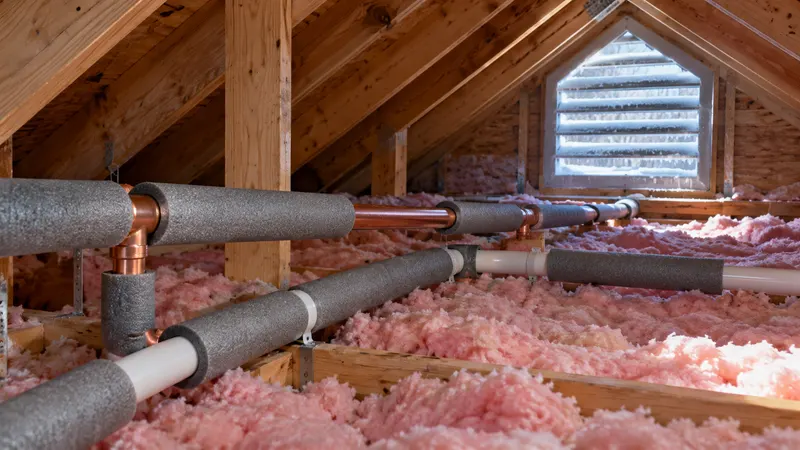
A Dallas winter is usually mild, which is exactly why a hard freeze does so much damage here. Many homes have water lines in attics, exterior walls, garages and crawl spaces with little protection, and a few cold nights are enough to split them. This guide walks you through how to winterize pipes before the first freeze, in the order that matters most.
Short answer: insulate exposed pipes, disconnect outdoor hoses, cover outside faucets, learn where your shut-off valve is, and on freezing nights let hot and cold water drip from faucets on outside walls with the cabinet doors open. Those steps come straight from Dallas Water Utilities and the American Red Cross.
Why Dallas pipes freeze more often than you would expect
Homes designed for cold climates often take steps to protect water lines from freezing. In Dallas, some homes have supply lines in attics, exterior walls and other unheated spaces, where they are vulnerable during a hard freeze.
The February 2021 winter storm showed the cost of that. By February 17, 2021, Dallas Water Utilities said it had responded to more than 1,000 burst pipes, as reported by CultureMap Dallas. Water expands as it freezes, the pipe splits, and the leak often only shows up when the ice thaws and water starts flowing again.
Which pipes in a Dallas home are most at risk
Walk your house once and note every pipe in these places:
- The attic. Common in Dallas homes, especially lines feeding upstairs bathrooms and attic water heaters.
- Exterior walls. Kitchen and bathroom sinks on outside walls, and the supply lines inside those cabinets.
- The garage. Washing machine lines, water heater connections and any pipe along the outer wall.
- The crawl space. Every supply line under a pier and beam house.
- Outdoors. Hose bibs, the pipe where it leaves the house and sprinkler backflow devices.
How to winterize pipes: the checklist
Complete these steps before freezing weather arrives. Some take only a few minutes; others, like insulating attic pipes, take an afternoon.
- Find and test your shut-off valve. Dallas Water Utilities says the private shut-off valve is often near an outside faucet close to the house. Turning the handle so it sits across (perpendicular to) the pipe stops the water. Older homes may have a buried valve shaped like an upside-down "L". Test it now, not during a leak.
- Insulate exposed pipes. Fit foam pipe sleeves on pipes in the attic, garage and crawl space. The American Red Cross also mentions UL-listed heat tape or heat cable for exposed water pipes; follow the product instructions exactly.
- Disconnect and drain garden hoses. A hose left on traps water in the faucet, which can freeze back into the wall. Dallas Water Utilities lists this as a before-the-freeze step.
- Cover outside faucets. An insulated faucet cover fits over the outdoor faucet to help protect it from freezing temperatures.
- Cover foundation vents on pier and beam homes. The City of Dallas recommends covering the vents around the foundation before a freeze.
- Check your sprinkler system. Make sure it has a working rain and freeze sensor, or turn the irrigation off by hand. The city warns that watering during a freeze can coat yards and streets in ice.
- Close the garage door. The Red Cross advises keeping it shut when water lines run through the garage.
What to do on the nights it freezes
The checklist protects the house; these steps get it through the actual cold.
- Drip hot and cold faucets on outside walls slowly. Moving water is much harder to freeze, and a hot line can freeze too when nothing flows through it.
- Open the cabinet doors under kitchen and bathroom sinks on outside walls so room heat reaches the pipes.
- Keep the thermostat steady day and night instead of turning it down overnight, as the Red Cross suggests. A slightly higher heating bill is easier to live with than a burst pipe.
- If you travel, leave the heat on at no lower than 55°F (Red Cross) and, for a trip of several days, shut off the water at the private valve and drain the outside faucets (Dallas Water Utilities).
Signs a pipe has already frozen
Watch for a faucet that gives only a trickle or nothing at all, frost on a visible pipe, or a bulge in a pipe. Our step-by-step guide on what to do if pipes freeze in Dallas covers thawing in detail. If you find one:
- Leave the faucet open so water can move once the ice starts to melt.
- Apply gentle heat with an electric hair dryer or towels soaked in warm water. Never use an open flame, and keep electrical equipment away from standing water.
- If a pipe has burst or you cannot safely reach the frozen section, shut off the main water valve if it is safe to do so and call a plumber.
After a freeze: check for hidden leaks
Damage often shows up after the thaw. Once temperatures rise, look in the attic, under sinks and along ceilings for drips or stains, listen for running water when everything is off, and check that your water meter is not moving with every fixture closed. A water heater that sat in a cold garage or attic is worth a look too; if it is leaking at its fittings, see water heater repair in Dallas.
For a split line in a wall or ceiling, emergency plumber help in Dallas is the right first call. If your home has older galvanized or polybutylene lines that keep failing in cold snaps, read about pipe repair and repiping in Dallas before the next winter.
Need a plumber in Dallas?
If a pipe has frozen, burst or started leaking, shut off the water at the main valve, then call now at (877) 340-0703 and describe what you see. Calls are answered 24/7. Not sure if your zip code is covered? See the Dallas areas we serve.
Sources
- January 2024 Winter Weather Response (City of Dallas, Dallas City News)
- With freeze and power outage behind us, Dallas' next hurdle is water (Feb. 18, 2021) (CultureMap Dallas)
- Frozen Pipes (American Red Cross)
This guide is general information for Dallas homeowners, not a substitute for a plumber inspecting your home.