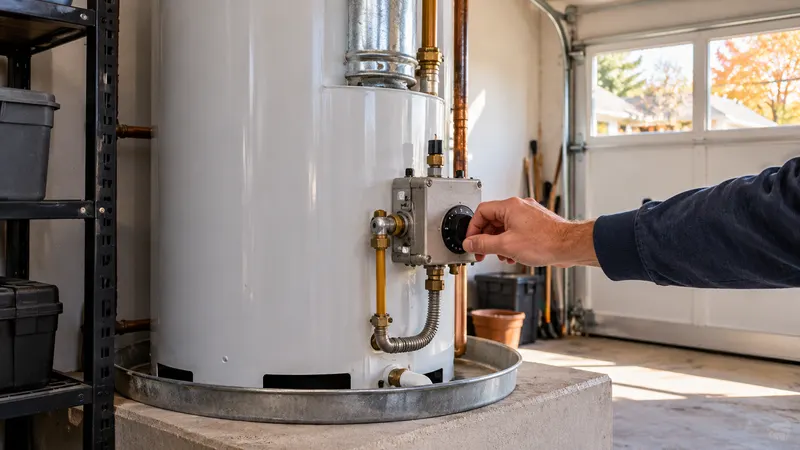
Water heater maintenance before winter is one of the easiest ways to avoid a cold shower on the first freezing morning in Dallas. In winter the water coming into your home is colder, so the heater runs longer and harder to reach the same temperature. Any weak spot, such as built-up sediment, a sticky relief valve or a blocked vent, tends to show up then.
Short answer: before winter, flush the tank to remove sediment, test the temperature and pressure (T&P) relief valve, have the anode rod checked, set the temperature to about 120°F, and, for a gas heater, have the vent and burner inspected. Those steps come from A. O. Smith's maintenance guide and the U.S. Consumer Product Safety Commission (CPSC).
Why winter is hard on a water heater
Many Dallas homes keep the water heater in a garage or attic, where the air gets cold. Colder air around the tank and colder water coming in both make the heater work longer. If the bottom of the tank is covered in sediment, heat has to pass through that layer first, which is why an older heater often gets noisy and slow to recover in winter.
A heater that is already struggling is the one most likely to fail when demand is highest.
Water heater maintenance checklist for a Dallas winter
Work through these in order. If any step involves gas, electricity or very hot water you are not comfortable with, leave it to a plumber.
- Look around the heater. Check the floor, the drain pan and the pipe connections on top for water, rust or corrosion. Keep boxes, paint and anything flammable away from a gas heater.
- Check the temperature setting. A. O. Smith says the setting is typically no higher than 120°F for most households. Higher settings raise the risk of scalding.
- Flush the tank. A. O. Smith says most tank water heaters need flushing at least once per year, and more often in hard water areas. Draining from the valve near the bottom removes the sediment that causes popping and slow heating.
- Test the T&P relief valve. This valve opens if pressure or temperature inside the tank gets too high. A. O. Smith says it should be inspected once a year by the homeowner and every five years by a professional. Follow the steps on the valve's label, and keep hands and feet clear of the discharge pipe, because the water is hot.
- Have the anode rod checked. The anode rod corrodes so the steel tank does not. A. O. Smith recommends inspecting it once a year. A heavily depleted anode rod provides less protection against tank corrosion, so have it inspected and replaced when necessary.
- Have gas venting and the burner inspected. The CPSC recommends a yearly professional inspection of fuel-burning equipment, including water heaters, flues and vents.
- Check your carbon monoxide alarms. The CPSC advises CO alarms on every level of the home and outside sleeping areas. Test and maintain them according to the alarm manufacturer's instructions.
This flushing procedure applies to tank-style water heaters only. Tankless models have no storage tank to flush, but many need periodic descaling; follow the manufacturer's instructions for your model.
How to flush a water heater safely
Flushing is the step most homeowners skip, and the one that matters most for a noisy or slow heater. The general process from A. O. Smith's guide looks like this:
- Turn off the power (electric) or set the gas control to pilot or off (gas), and let the water cool, since a full tank is very hot.
- Turn off the cold water supply to the heater.
- Attach a garden hose to the drain valve and run it to a floor drain or outside.
- Open a hot water faucet in the house, then open the drain valve and let the tank drain. If your owner's manual calls for it, briefly turn the cold water supply back on while the drain valve is open to push the remaining sediment out. Keep going until the water runs clear, then shut off the cold water supply.
- Close the drain valve, turn the cold water back on and let the tank fill completely before restoring power or gas. An electric heater turned on with an empty tank can burn out its heating element.
Always check your owner's manual first, because steps differ by model. If the drain valve will not open, leaks after closing, or the water stays cloudy, stop and call a plumber.
Gas water heaters: signs to take seriously
A gas water heater burns fuel, so it needs a clear vent to carry exhaust outside. The CPSC lists water heaters among fuel-burning appliances that can produce carbon monoxide when they malfunction. Early CO symptoms include headache, dizziness, nausea and confusion; if you suspect CO, get outside to fresh air and call 911.
If you smell gas near the heater, do not try to fix anything. Atmos Energy's advice is to leave the area and call 911 and the Atmos emergency line at 866-322-8667 from a safe distance. For gas piping problems in the house, see gas line repair in Dallas.
When to call a plumber instead
Maintenance cannot fix every problem. Call a plumber if you notice:
- Water pooling under the tank or rust at the bottom of the tank
- No hot water, or hot water that runs out much faster than it used to
- A relief valve that keeps dripping or will not close
- A pilot light that will not stay lit
- Rusty or smelly hot water
Our page on water heater repair in Dallas explains what happens next. If a tank is actively leaking or flooding, an emergency plumber in Dallas is the right first call. While you are getting ready for cold weather, our guide on how to winterize pipes in Dallas covers the rest of the house.
Need a plumber in Dallas?
If your water heater is leaking, noisy or not keeping up, call now at (877) 340-0703 and describe what is happening. Calls are answered 24/7. See the Dallas zip codes we serve to check your area.
Sources
- Water Heater Maintenance Guide (A. O. Smith (water heater manufacturer))
- Home Heating Equipment (U.S. Consumer Product Safety Commission (CPSC))
- Carbon Monoxide Information Center (U.S. Consumer Product Safety Commission (CPSC))
- Recognizing a Leak (Atmos Energy)
This guide is general information for Dallas homeowners, not a substitute for a plumber inspecting your home.